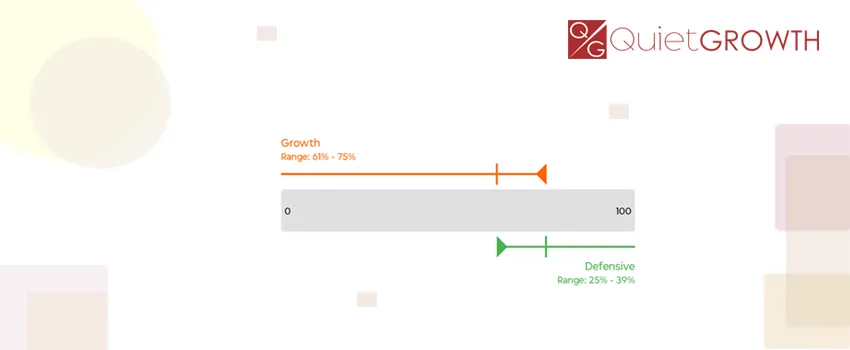
QuietGrowth has designed an intuitive method to illustrate the minimum and maximum allocation constraints for a portfolio’s growth and defensive components. Now you can see, at a glance, the allocation range limits of a portfolio in a single image. We hope this simple yet meaningful illustration method we developed helps our clients to better understand our portfolio management activity.
Here are three examples of our design method. The examples consider only two components, growth and defensive, and not a possible third component of hybrid. That is, all assets are classified into one of two components: growth and defensive.
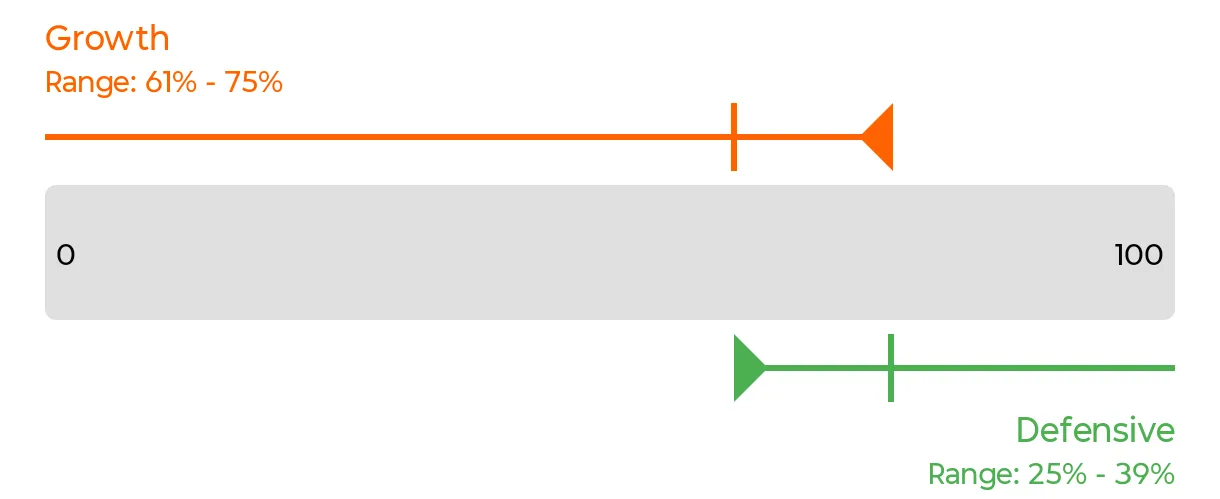
Example 1: The illustration below shows that the allocation range for the growth component in the target portfolio is 61% to 75%. So, the allocation range for the defensive component of the same portfolio is 25% (100% minus 75%) to 39% (100% minus 61%).
Here, Defensive minimum = 100% minus Growth maximum. Defensive maximum = 100% minus Growth minimum.
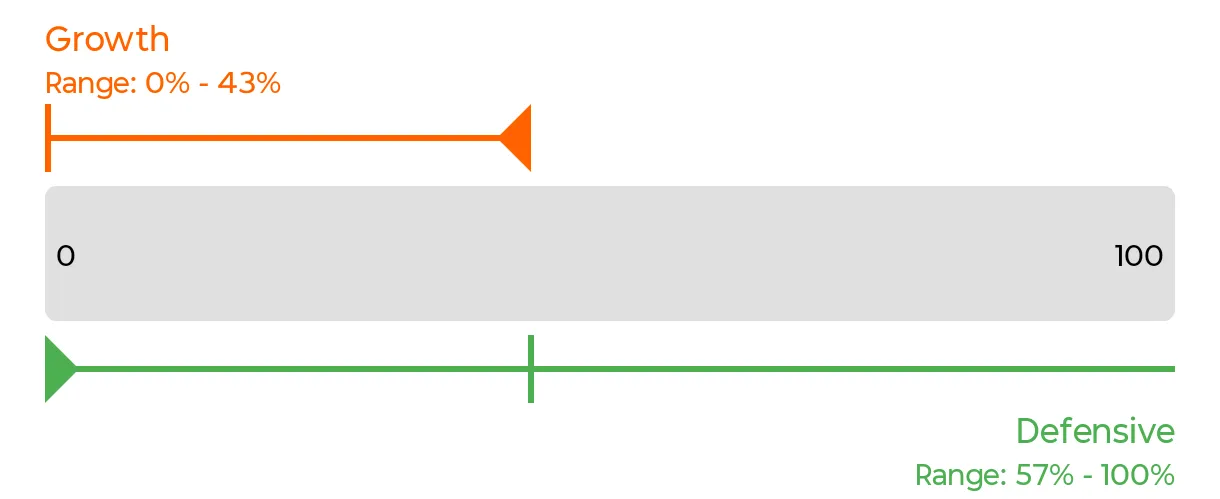
Example 2: The illustration below shows that the allocation range for the growth component in the target portfolio is 0% to 43%. So, the allocation range for the defensive component is 57% (100% minus 43%) to 100% (100% minus 0%).
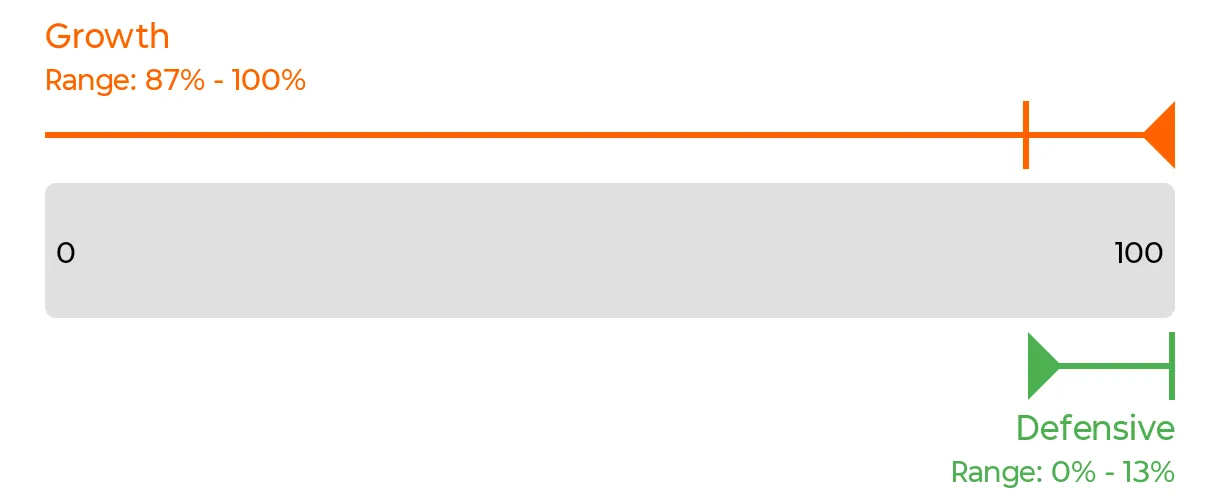
Example 3: The illustration below shows that the allocation range for the growth component in the target portfolio is 87% to 100%. So, the allocation range for the defensive component is 0% (100% minus 100%) to 13% (100% minus 87%).
This design approach for the QuietGrowth Portfolios is viewable in the ‘Growth vs Defensive’ section of the ‘Investment interactives‘ page.
QuietGrowth has been publishing content in this blog or in other sections of the website. Contributors for this content may include the employees of QuietGrowth, or third-party firms, or third-party authors. Unless otherwise noted, such content does not necessarily represent the actual views or opinions of QuietGrowth or any of its employees, directors, or officers.
Any links provided in our website to other websites are for the purpose of convenience, or as required by any such other websites. Unless otherwise noted, this does not imply that QuietGrowth endorses, is affiliated, and/or promotes any information, or products or services of those websites. Please read the advice disclaimer section of the website too.